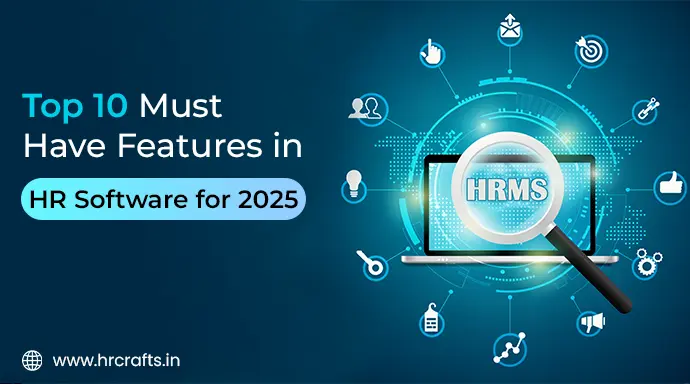
Top 10 Must-Have Features in HR Software for 2025
In today’s fast-evolving business landscape, HR software is no longer a
luxury—it’s a necessity. With advancements in artificial intelligence,
automation, and data analytics, modern HR solutions are transforming how
companies manage their workforce. Whether you’re a startup or an enterprise,
investing in feature-rich HR software
System like HRCraft can streamline operations, enhance employee
engagement, and improve overall efficiency.
So, what are the top must-have features to look for in an HR software in
2025? Let’s explore:
AI-Powered Recruitment and Onboarding
Hiring the right talent is critical for any organization. Advanced HR
software should have AI-powered recruitment tools that help screen resumes,
schedule interviews, and even analyze candidate suitability. Additionally,
an automated onboarding process ensures a seamless transition for new hires.
Attendance Tracking and Time Management
Accurate attendance tracking is essential for managing employee productivity.
A modern HR system should support:
- Biometric and RFID-based attendance
- GPS-basedattendance
tracking
System for remote workers
- Automated leave and overtime management
By integrating attendance tracking with payroll, businesses can reduce errors
and ensure timely salary processing.
Cloud-Based Accessibility and Mobile App Support
Remote and hybrid work models are here to stay. A cloud-based HR software
with mobile app support allows HR teams and employees to access data, apply
for leaves, track attendance, and update personal details anytime, anywhere.
Payroll and Compliance Automation
Manually managing payroll can lead to errors and compliance issues. An
advanced HR system should:
- Automate salary calculations, tax deductions, and reimbursements
- Ensure compliance with labor laws and tax regulations
- Generate payslips and reports with a single click
Performance Management System (PMS)
A robust performance management system is essential for tracking employee
growth. Key features should include:
- Goal setting and progress tracking
- 360-degree feedback and peer reviews
- AI-based performance analytics
Learning Management Systems (LMS) for Employee Upskilling
With skill development becoming a priority, learning management systems (LMS)
are a must-have in HR software. A good LMS should:
- Provide online training modules and certifications
- Track employee progress and learning history
- Offer AI-driven personalized learning recommendations
Employee Self-Service Portal
Empowering employees to manage their HR-related tasks reduces the
administrative burden. A self-service portal allows employees to:
- Update personal information
- Apply for leaves and check balances
- Download payslips and tax documents
AI Chatbots for Employee Queries
AI-driven HR chatbots can handle trending FAQ queries like leave policies,
salary breakdowns, and compliance regulations. This reduces dependency on HR
teams and improves employee satisfaction.
Advanced Analytics and Reporting
Data-driven decision-making is key to efficient HR management. A top-tier HR
system should provide:
- Real-time workforce analytics
- Customizable reports on attendance, performance, and engagement
- Predictive analytics for turnover and hiring trends
Seamless Integration with Third-Party Tools
HR software should integrate smoothly with payroll systems, project
management tools, and collaboration platforms like Slack, Microsoft Teams,
and Zoom. This ensures seamless workflow and improved productivity.
Conclusion
The right HR software should not only simplify administrative tasks but also
drive strategic HR decisions. Whether you’re looking for attendance
tracking, learning management systems, or AI-powered recruitment, investing
in a solution like HRCraft can give your business a competitive edge in
2025.
Looking for the best HR software? Check out HRCraft and transform your HR
operations today!
(FAQs)
-
What is HR software, and why is it important?
HR software is a digital solution that automates and
streamlines HR functions such as payroll, recruitment,
attendance tracking, and performance management. It helps
businesses improve efficiency, compliance, and employee
satisfaction.
-
How does attendance tracking work in HR software?
Modern HR software uses biometric, RFID, GPS, and AI-powered
facial recognition to track employee attendance accurately.
It also integrates with payroll systems to ensure accurate
salary calculations.
-
What are Learning Management Systems (LMS) in HR
software?
LMS are platforms within HR software that offer training
modules, courses, and skill development programs. They help
employees upskill and track their learning progress through
certifications and assessments.
-
Can HR software handle payroll and tax compliance?
Yes, advanced HR software like HRCraft automates payroll
calculations, tax deductions, and compliance with labor
laws, reducing errors and ensuring timely payments.
-
Is cloud-based HR software secure?
Yes, most modern HR solutions use encryption, multi-factor
authentication, and regular security updates to protect
sensitive employee data.
-
What are the benefits of using AI-powered HR
chatbots?
AI-powered chatbots assist employees with trending FAQ
queries, reducing the HR department’s workload while
ensuring employees get instant answers about leave policies,
payslips, and performance reviews.
-
How does HR software help with employee engagement?
HR software enhances engagement by providing self-service
portals, AI-driven learning suggestions, 360-degree
feedback, and personalized career development plans.
-
Can HR software be customized for different
industries?
Yes, many HR software solutions, including HRCraft, offer
customizable modules to suit the needs of various industries
like healthcare, IT, manufacturing, and retail.